
This page is a working substitute for a PDF deck — it holds the full investor summary and the complete deck content, kept in sync as the project develops. Prepared for a select group of prospective investors. Figures marked illustrative or preliminary are not a forecast or guarantee.
Not a hotel with a coworking room — a home base built around working and living well. Private room + professional coworking + pool + gym + communal kitchen + community. Long stays (2 weeks–3 months) create a stable occupancy floor; short stays capture high-season ADR upside. No restaurant, no large staff — lean by design.
Social × Creative × Healthy × Business. Remote professionals, creatives/founders and project workers, roughly 27–35, staying 2 weeks to 3+ months — disposable income, but community and flexibility over a hostel or a business hotel.
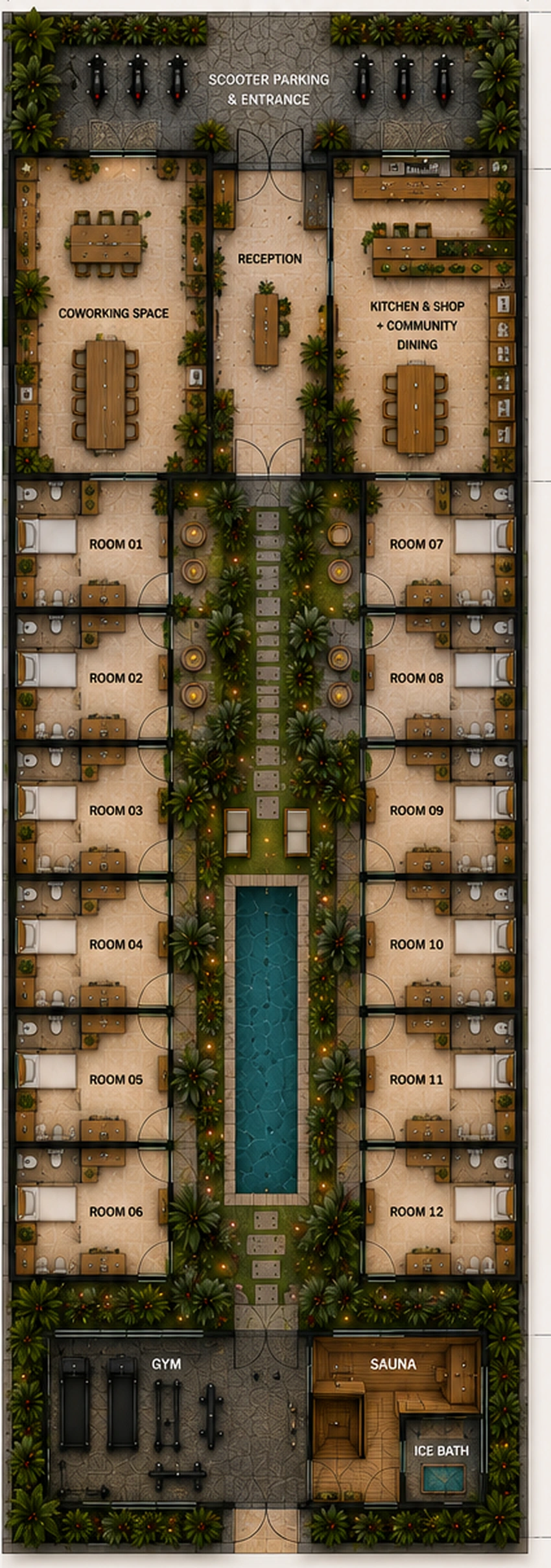
Lombok's accommodation base is overwhelmingly optimised for short, few-night stays. We believe a meaningful part of the remote-work, creative and project-based population that already visits Lombok — and the wider European/international remote-work market — would stay for weeks rather than days if accommodation, internet and workspace were purpose-built for it. This is the gap Salamina is built to fill; it is a thesis to be tested, not a guaranteed outcome.
This is not a claim that Senggigi has zero coworking activity — a number of cafés and small setups exist. The defensible thesis is narrower: dedicated, professional coworking infrastructure in Senggigi/Kerandangan appears limited relative to Kuta, and there is apparent whitespace for an integrated, purpose-built coliving + coworking resort in a quieter, more established part of the island.
Indicative seasonal strategy: more rooms allocated to monthly guests in low season; more inventory released to short-stay demand in high season.
| Stay type | Indicative rate |
|---|---|
| Short stay | ≈ €40–50 / night |
| Medium stay | ≈ €28–35 / night |
| Monthly stay | ≈ €550–700 / month |
| 2–3 month stay | Potentially below monthly rate |
The model is deliberately kept interesting around 60–65% occupancy — not built on an 85–90% best case. "Operating result" above means revenue less operating costs before financing, tax, capex and reserves; it is not free cash flow, EBITDA in the accounting sense, or a promised distribution. Construction cost, pricing and occupancy are all preliminary and subject to due diligence.
A structure combining an agreed preferred return with profit-sharing is being explored: investors receive priority from distributable cash up to an agreed preferred return, after which remaining profit is shared under an agreed formula.
Policy under consideration: retain roughly six months of fixed operating costs in reserve before any distribution is made.
No fixed or guaranteed return is offered. Any percentage discussed is illustrative scenario language, not a promise.
Rather than fixing ownership percentages before the legal and capital structure is finalised, Salamina is currently discussing indicative investment tickets of €40k, €50k and €60k. The IDR equivalents below use an indicative planning rate of approximately IDR 20,631 per €1, consistent with the ECB EUR/IDR reference range in August 2026. These figures show how much of the IDR 5.0bn / ≈€242k total project budget each ticket would fund; they are not proposed equity percentages and the final conversion will depend on the transaction date.
Equivalent to roughly 16.5% of the total project funding requirement. Final ownership and investor rights depend on the agreed structure.
Equivalent to roughly 20.6% of the total project funding requirement. This is a useful reference point for structuring a small investor group.
Equivalent to roughly 24.8% of the total project funding requirement. A larger commitment could reduce the number of outside investors required.
The final investor package will be based on the actual capital committed, the founder's contribution, treatment of the land, governance rights, preferred-return mechanics and the Indonesian / Dutch legal and tax structure. For that reason, Salamina is deliberately not advertising a fixed equity percentage per €40k, €50k or €60k ticket yet. The objective is a transparent structure in which capital, ownership, distributions and exit rights are documented before funds are committed.
The target is a maximum of four external investors. The current total project budget is approximately IDR 5.0 billion (≈ €242k), consisting of IDR 1.0 billion (≈ €48k) for the land and IDR 4.0 billion (≈ €194k) for Phase 1 construction, fit-out and development. The target is a maximum of four external investors alongside the founder. Final ticket sizes, equity percentages and the founder/investor capital split will be agreed in the final structure.
Indicative investment horizon: 7–10 years, not yet fixed. Exit mechanisms to be defined in the investor agreement, potentially including sale of the project, a founder buyback, transfer to another investor, a shareholder right of first refusal, and an agreed valuation methodology.
Salamina is intended to be commercially disciplined and locally positive. The ambition is not only to create an attractive hospitality asset, but to create stable local employment, invest in skills, buy from Lombok-based suppliers wherever practical and build a project that adds value to Kerandangan without losing the character that makes the area special. We are looking for investors who care about both how the business performs and how that value is created.
Build a dependable local team, provide practical hospitality and digital-workplace training, and create opportunities for people to grow with the business.
Prioritise capable Lombok-based contractors, makers, growers, service providers and suppliers, keeping more of the project's economic activity on the island.
Operate at a human scale, maintain good neighbour relationships and create a place that contributes to Kerandangan rather than overwhelming it.
Passive investors can participate through capital, agreed governance rights and regular reporting without taking responsibility for day-to-day operations. The local team and founder remain accountable for execution.
Investors with relevant experience may contribute actively in areas such as brand strategy, digital marketing, partnerships, distribution, content, performance marketing or international customer acquisition. Any active role, time commitment, decision rights and compensation would be agreed clearly in advance; investing does not automatically create an operating position.
Both profiles are welcome. Alignment, trust and a shared desire to build a responsible long-term business matter more than whether an investor is active or passive.
The founder is an entrepreneur with existing hospitality experience on Lombok — owner and operator of a successful beachfront beach club with 11 hotel rooms, part of a wider family business network built over years on the island. Read the full story on the About Us page.
The founder's existing 11-room beach operation is winding down in its current form. Selected inventory — beds, air conditioners, pool equipment, loungers, tables, chairs, selected bar components — can transfer into Salamina at low incremental cost, materially reducing opening capex. Not everything will be reused; the new resort still has to look coherent and premium, and coworking equipment is being bought new because it is central to the proposition.
This is not a first-time hospitality venture in a foreign market. It is an experienced local operator launching a new, differentiated concept on top of an existing operating platform, family network and execution relationships — while personally contributing capital, existing assets, development work and operating expertise to the project.
Years of operating on Lombok have built direct relationships across the people required to design, build, permit and run this project — reducing the execution risk of a ground-up development.
These are existing relationships, not commitments — every contractor, quote and legal step is still subject to normal procurement and due diligence. What they remove is the friction of starting from zero in an unfamiliar market.
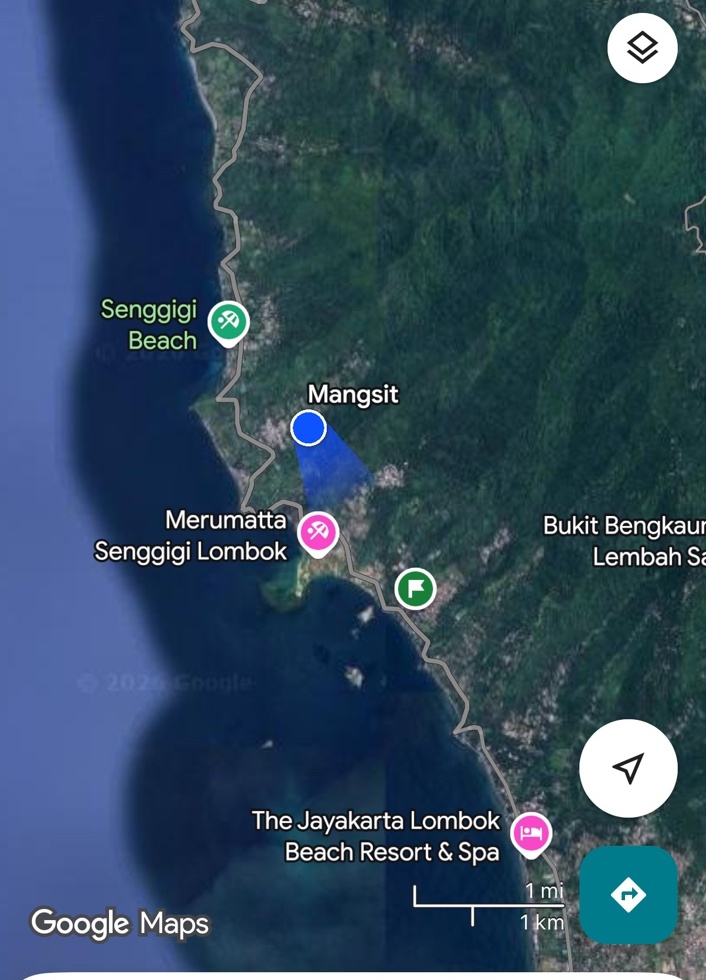
12 rooms + full facilities, ground floor
Occupancy, ADR and community traction, tracked
Potential first floor, +6–10 rooms
Build 12 excellent rooms first. Expand only when the market proves that additional capacity is required.
| Risk | Mitigation |
|---|---|
| Construction cost overruns | Local contractor relationships, phased build, contingency in budget, capex reduced via transferable inventory from the existing operation |
| Lower-than-expected occupancy | Base case underwritten around 60–65% occupancy, not 85–90%; hybrid long/short model sets an occupancy floor |
| Regulatory / licensing risk (zoning, PBG, KBLI, accommodation licensing) | Professional Indonesian legal and tax advice engaged before funds are committed; no shortcuts on permitting |
| Foreign ownership / corporate structure | Structured through a proper PT PMA and/or holding arrangement — no nominee land ownership structures |
| Currency risk (IDR / EUR) | Acknowledged and disclosed; not hedged at this stage — factored into conservative scenario planning |
| Management / key-person dependence | Lean staffing model reduces operational complexity; founder has direct, current hospitality operating experience |
| Illiquidity of the investment | Investors should plan for a multi-year hold (indicative 7–10 years); exit mechanisms to be defined contractually |
| Tourism cyclicality | Long-stay base provides revenue stability through low season; small scale limits absolute downside |
Before any investor funds are committed, Indonesian and Dutch legal/tax advice is required on land title, zoning (RDTR), PBG, KBLI classification, accommodation licensing, PT PMA requirements, shareholder structure, taxation and dividend withholding. No nominee land ownership structures will be used. The investment scope now includes both the land acquisition and Phase 1 construction. The current indicative budget is IDR 5.0 billion in total: IDR 1.0 billion for land and IDR 4.0 billion for construction, fit-out and development. Final ownership, holding structure and investor rights remain subject to Indonesian and Dutch legal and tax advice.
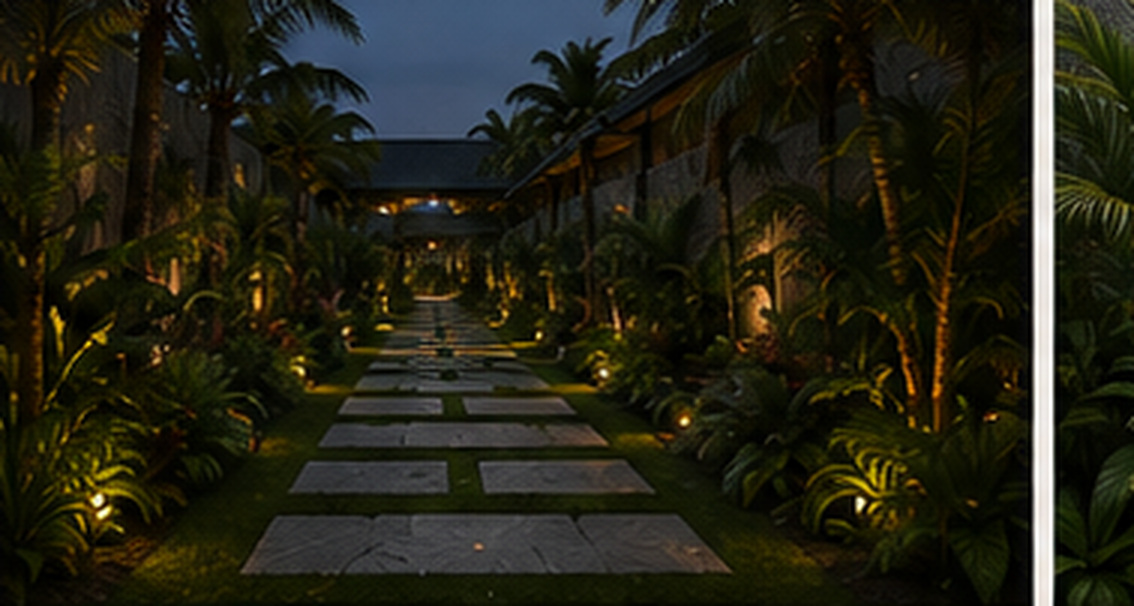
The investment now includes both the land and the Phase 1 development. Indicative allocation: IDR 1.0bn (≈ €48k) land + IDR 4.0bn (≈ €194k) construction, fit-out and development = IDR 5.0bn (≈ €242k) total. We are seeking up to four aligned external investors alongside the founder: passive capital partners are welcome, while investors with marketing, brand or growth experience may choose an active, clearly defined advisory role. In both cases, we want people who value commercial performance and positive local impact.